
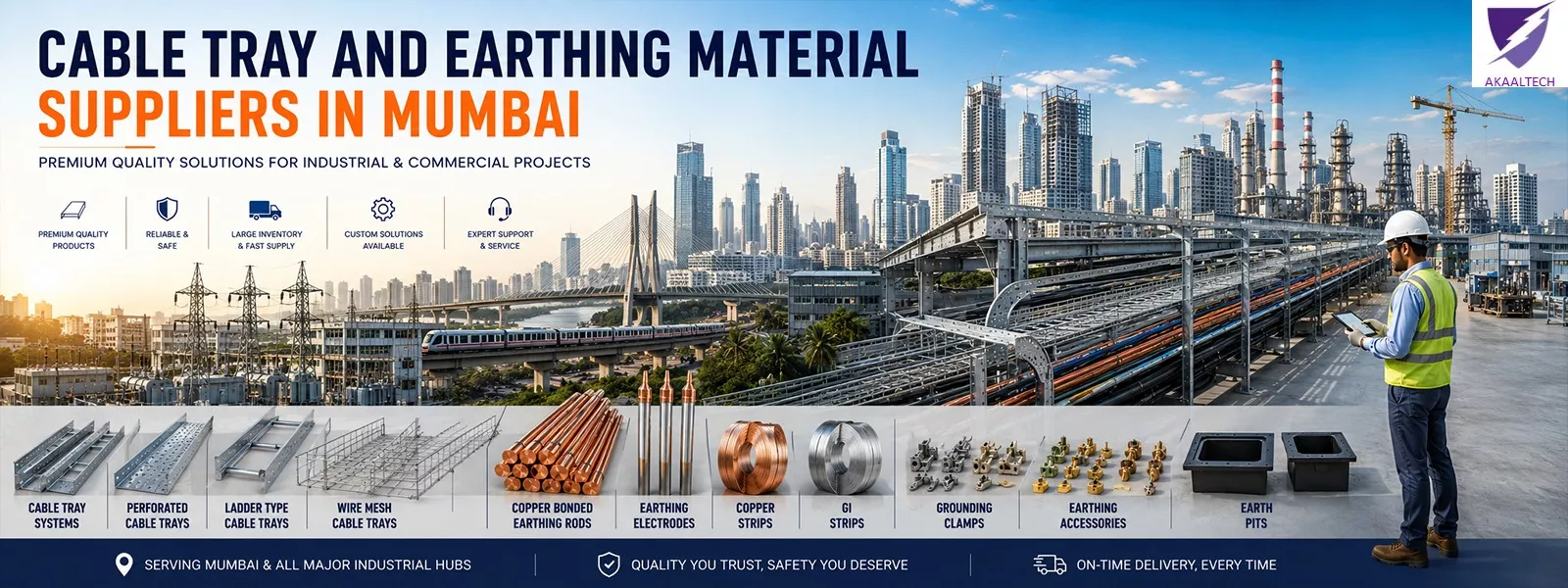
If you are setting up an electrical system for a factory, data centre, hospital, or commercial building, the quality of your cable management and earthing system matters more than most people realise. A poorly installed cable tray or substandard earthing strip can cause equipment damage, electrical faults, and serious safety hazards. That is why choosing a reliable cable tray manufacturer in Mumbai is a decision worth making carefully.
Mumbai is one of India's most active hubs for infrastructure projects, industrial facilities, and commercial construction. Demand for quality cable trays, earthing materials, and lightning protection equipment is high and growing. Akaaltech serves this demand as a manufacturer and supplier with a focus on product quality, material standards, and timely delivery.
This guide covers everything you need to know about cable trays, earthing products, and lightning protection - what they are, how they work, and how to choose the right one for your project.
Understanding Cable Trays and Earthing Systems
A cable tray is a structural support system used to hold and route electrical cables across a facility. Instead of running cables loosely or through expensive conduit, cable trays provide an open, organised path that is easy to inspect and modify.
Earthing systems (also called grounding systems) provide a safe path for fault current to flow into the earth. When a fault occurs in an electrical system, the earthing system prevents dangerous voltage from building up on equipment surfaces. This protects both the equipment and the people who work around it.
Together, cable trays and earthing materials form the backbone of electrical infrastructure in any building or industrial facility. Without them, electrical systems are harder to manage, more prone to damage, and far more dangerous to operate.
Types and Variants Available from Akaaltech
Akaaltech manufactures and supplies a wide range of products for cable management, earthing, and lightning protection:
Cable Trays
Standard cable trays are used to support cables in industrial plants, warehouses, and commercial buildings. They are available in various widths and load capacities to match the number and weight of cables in a given run.
Perforated Cable Trays
A perforated cable tray manufacturer in Mumbai supplies trays with punched holes along the base and sides. These perforations improve airflow around cables, which helps manage heat in high-load electrical systems. They are commonly used in data centres and IT infrastructure projects. As a perforated cable tray supplier in Mumbai, Akaaltech offers these in GI and stainless steel options.
Chemical Earthing Electrodes
Chemical earthing electrodes use a conductive compound (typically a mixture of graphite, bentonite, and other materials) inside a copper or GI pipe to create a low-resistance earth connection. They are especially useful in rocky or dry soil conditions where traditional plate earthing does not work well. Akaaltech is among the established chemical earthing electrode manufacturers in Mumbai.
Copper Earthing Strips
Copper earthing strips are used to connect earth electrodes, equipment panels, and bonding conductors. Copper has excellent electrical conductivity and corrosion resistance, making it the preferred material in critical installations. Akaaltech is a copper earthing strips supplier in Mumbai catering to power plants, hospitals, and data centres.
GI Earthing Strips and Galvanized Earthing Strips
GI (galvanised iron) earthing strips are a cost-effective alternative to copper strips. They provide good conductivity and are suitable for most industrial and commercial earthing systems. As both a GI earthing strips manufacturer in Mumbai and a galvanized earthing strips supplier in Mumbai, Akaaltech produces these in standard sizes as well as custom dimensions. Galvanized earthing strips offer added corrosion protection through the zinc coating.
Lightning Arresters
Lightning arresters protect buildings, towers, and electrical equipment from direct lightning strikes. A conventional lightning arrester supplier in Mumbai will typically offer both air-terminal type and early streamer emission (ESE) type arresters. Akaaltech supplies conventional lightning arresters for rooftop installations, telecom towers, and large commercial buildings.
Key Features and Benefits
Whether you are buying cable trays or earthing materials, the following product qualities matter:
- Corrosion resistance - GI and galvanized products are zinc-coated to resist rust in humid or outdoor environments. Copper products naturally resist corrosion over decades.
- Electrical conductivity -Copper and quality GI materials maintain low resistance across the earthing circuit, ensuring fault currents discharge quickly and safely.
- Durability - Good cable trays handle the weight of loaded cables without bending or sagging. Earthing strips maintain structural integrity even in direct buried or outdoor applications.
- Load-bearing capacity - Cable trays are rated for specific loads per metre. Choosing the correct rating prevents tray deformation and cable damage.
- Safety benefits - Proper earthing and cable containment reduce the risk of electrical fires, equipment damage, and electric shock injuries.
- Long service life - Quality materials with proper coatings last 20 to 30 years or more with minimal maintenance.
- Low maintenance - Open cable trays allow easy inspection and cable addition. Chemical earthing electrodes require no periodic replacement of materials.
Key Features and Benefits
The demand for cable trays, earthing materials, and lightning protection comes from a broad range of sectors:
- Power plants and substations - Heavy cable loads, high-voltage systems, and critical earthing requirements make quality materials essential.
- Manufacturing facilities - Large machines and automated systems require well-organised cable runs and reliable earthing to prevent electrical interference.
- Commercial buildings - Office towers and shopping centres use cable trays extensively to manage low-voltage, data, and power cables.
- Data centres - Perforated cable trays help manage heat in server rooms. Earthing systems prevent electrostatic discharge from damaging sensitive equipment.
- Telecom projects - Towers and communication equipment need lightning arresters and proper earthing to protect against surges.
- Infrastructure projects - Bridges, metros, airports, and highways all rely on cable management systems.
- Warehouses and logistics parks - Large floor areas require long cable tray runs to manage power and lighting circuits.
- Hospitals - Uninterrupted power and safe earthing are critical for patient safety and medical equipment protection.
- Educational institutions - Schools and universities need safe, organised electrical installations across multiple buildings.
How to Choose the Right Product for Your Project
Buying the wrong product wastes money and can create safety issues. Here is a practical guide:
- Determine the material - Copper is best for high-conductivity and long-life applications. GI and galvanised materials are more affordable and suitable for most standard industrial uses.
- Check the thickness - Earthing strips and cable tray sheets should meet the minimum thickness specified by IS standards for your application. Thinner material may not handle fault current or cable loads properly.
- Verify the coating quality - For outdoor or buried applications, zinc coating thickness on GI products matters. Ask for the coating standard before purchasing.
- Confirm standards compliance - Look for products that comply with BIS (Bureau of Indian Standards) and IEC (International Electrotechnical Commission) standards relevant to your installation type.
- Match to project requirements - A small building needs different tray sizes than a large power plant. Match load ratings and cable fill to the actual number of cables you plan to run.
- Consider the installation environment - Coastal or chemical-exposed environments need stainless steel or heavy-duty galvanized products. Indoor dry environments can use standard GI products.
Why Quality Matters in Electrical Safety
It can be tempting to cut costs on earthing and cable management materials. But the consequences of poor-quality products are significant.
Consider a manufacturing plant where a motor fault occurs. If the earthing system uses undersized or corroded GI strips, the fault current may not discharge quickly enough. This can cause the motor casing to remain at a dangerous voltage - creating a shock hazard for workers. In a worst case, it can cause an arc flash or fire.
Similarly, a data centre that uses cable trays without adequate load ratings may see trays sag and pinch cables over time. This leads to cable insulation damage, intermittent faults, and potential downtime.
Proper earthing also reduces electromagnetic interference (EMI) in sensitive environments. Hospitals, for example, rely on clean earthing to ensure that medical monitoring equipment gives accurate readings.
From a regulatory standpoint, installations must comply with the Indian Electricity Rules, 2005, and relevant BIS and IEC standards. Using substandard products can lead to failed inspections and liability in the event of an accident.
Quality materials from verified manufacturers reduce these risks. They also reduce the total cost of ownership - a product that lasts 25 years without replacement is cheaper than three budget replacements over the same period.
Why Businesses Prefer Reliable Manufacturers and Suppliers in Mumbai
Mumbai-based buyers benefit from working with local manufacturers for several practical reasons:
- Product quality: Established manufacturers follow documented production processes. Akaaltech produces cable trays and earthing products to defined material and dimensional specifications, reducing the risk of site rejections.
- Manufacturing standards: Local manufacturers are familiar with IS and IEC standards relevant to Indian electrical installations. This matters when products need to pass site inspections.
- Timely delivery: A cable tray supplier in Mumbai or a GI earthing strips supplier in Mumbai can typically deliver faster than suppliers from other cities or countries. This keeps construction schedules on track.
- Customisation: Projects often require non-standard cable tray widths, strip thicknesses, or electrode depths. A manufacturer with its own production line can accommodate custom requirements that a reseller cannot.
- Technical support: Working with a manufacturer means access to technical guidance on product selection, installation methods, and standards compliance. This is valuable during the design and procurement phase.
- Bulk supply capability: Large infrastructure projects need consistent supply of large quantities. Local manufacturers can plan production and warehouse stock to meet project timelines without delays.
As a perforated cable tray supplier in Mumbai, galvanized earthing strips manufacturer in Mumbai, and conventional lightning arrester supplier in Mumbai, Akaaltech addresses all these requirements from a single location.
Frequently Asked Questions
1. What is a perforated cable tray?
A perforated cable tray is a cable management tray with punched holes along its base and sides. These holes allow air to circulate around cables, which helps prevent overheating in high-load electrical systems. Perforated trays are lighter than solid-bottom trays and are commonly used in data centres, server rooms, and commercial buildings.
2. Why are GI earthing strips used instead of copper?
GI (galvanised iron) earthing strips are used when cost is a primary consideration and the earthing system does not require the very high conductivity of copper. GI strips are suitable for most standard industrial and commercial earthing applications. They are less expensive than copper and, when properly galvanised, offer good corrosion resistance for many years.
3. How do copper earthing strips improve grounding performance?
Copper has significantly lower electrical resistance than GI, which means fault current can travel through the earthing system more quickly and efficiently. This lowers the step and touch potential during a fault event, improving safety. Copper also resists corrosion naturally, making it a better long-term choice for critical installations such as hospitals, data centres, and high-voltage substations.
4. What industries require lightning arresters?
Any industry with tall structures, outdoor installations, or sensitive electronic equipment benefits from lightning arresters. Common applications include telecom towers, power substations, petrochemical plants, industrial buildings, hospitals, schools, and commercial high-rises. In Mumbai, which experiences significant monsoon lightning activity, proper lightning protection is especially important.
5. How do chemical earthing electrodes work?
Chemical earthing electrodes consist of a conductive pipe (usually copper or GI) filled with a semi-conductive compound such as graphite and bentonite. This compound absorbs moisture from the soil and maintains low resistance even in dry or rocky ground. Unlike conventional plate electrodes, chemical electrodes do not require watering and perform more consistently across seasons.
6. How do I choose the right cable tray size?
Cable tray size depends on the number of cables, their diameters, and the required fill ratio. A common industry rule is to keep cable fill at around 40 to 50 percent of the tray's cross-sectional area to allow for future cable additions and adequate heat dissipation. Width and depth options should be matched to the cable schedule for each tray section in your project.
7. What is the difference between a GI earthing strip and a galvanised earthing strip?
The terms are often used interchangeably. GI earthing strips are made from iron or mild steel that has been galvanised (coated with zinc) to prevent corrosion. Galvanised earthing strips refer to the same product. The zinc coating thickness matters for outdoor or buried applications - thicker coatings provide longer service life. Both types are widely used in Indian electrical installations.
8. What standards apply to cable trays and earthing products in India?
In India, cable trays should comply with IS 12084 for cable trays and trunking. Earthing systems must comply with IS 3043, which covers the code of practice for earthing. Lightning protection systems should follow IS 2309. For international projects, IEC 61024 and IEC 60364 series are commonly referenced. Always confirm the applicable standard with your project engineer.
9. Can cable trays be customised for specific project dimensions?
Yes. Manufacturers with their own production facilities can produce cable trays in non-standard widths, lengths, and load ratings. Custom perforations, material grades, and coating specifications are also possible for specialised applications. It is advisable to provide full project drawings and cable schedules to the manufacturer during the planning phase.
10. How long do earthing systems typically last?
A properly installed earthing system using quality copper or galvanised GI materials can last 20 to 30 years or more in normal soil conditions. Chemical earthing electrodes generally have a design life of 10 to 15 years, though many last longer. Regular testing with an earth resistance tester (as recommended by IS 3043) helps confirm that the system remains within acceptable resistance limits over time.
Conclusion
Cable trays, earthing strips, chemical electrodes, and lightning arresters are not products to compromise on. They are the foundation of electrical safety in every facility — from a small commercial office to a large power plant or hospital complex.
Choosing the right materials, verifying standards compliance, and working with a manufacturer who understands the technical requirements of your project all contribute to a system that performs reliably and safely over its full service life.
Akaaltech serves as a cable tray manufacturer in Mumbai and a supplier of the full range of earthing and lightning protection products that modern electrical infrastructure requires. Whether your project needs a perforated cable tray supplier in Mumbai, a chemical earthing electrode, copper earthing strips, GI or galvanised earthing strips, or a conventional lightning arrester, Akaaltech can meet those needs with consistent product quality and responsive service.
For bulk orders, custom requirements, or technical queries, reach out to Akaaltech to discuss your project needs.
