
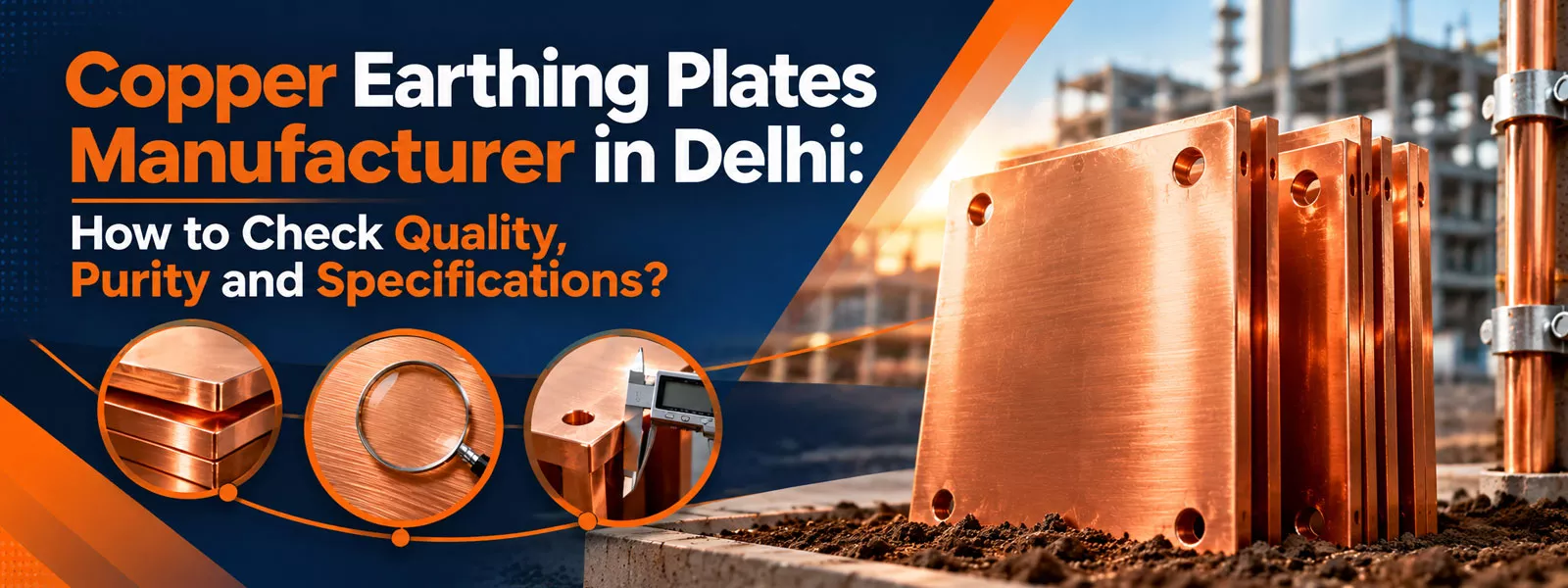
To judge a copper earthing plates manufacturer in Delhi, check three things. First, purity: the plate should be 99.9% electrolytic copper, backed by a mill test certificate (MTC). Second, thickness and size: measure them yourself instead of trusting the quoted figure. Third, finish: look for a clean surface, a sound weld or strip joint, and clear marking. Most earthing failures trace back to one of these three.
How to Check a Copper Earthing Plate: 6 Quick Steps for Delhi Buyers?
- Ask for the MTC and match its batch number to the marking on the plate.
- Confirm 99.9% copper content through an XRF reading or a lab report.
- Measure thickness at several points with a thickness gauge or vernier caliper.
- Check length and width against your order (for example, 600x600 mm).
- Weigh a plate and compare it with the calculated weight for that size.
- Inspect the surface, edges, and weld or strip joints for defects.
Each step is explained below.
How to Check Copper Purity for Plates Sourced in Delhi?
Purity decides how well the plate conducts and how long it lasts underground. At Akaaltech, we make earthing plates from electrolytic copper at 99.9% purity, and every batch can be traced through its MTC. Anything lower usually means scrap or alloyed material.
Reading the MTC from a Delhi Manufacturer
An MTC (mill test certificate) records the chemical composition of the material. Do not just check that one exists. Look for these:
- The copper percentage is stated, not just "copper."
- A heat or batch number is printed.
- The batch number matches the number on your plates.
- The certificate carries a date, a signature, and the issuing lab or mill name.
A common trick is a generic MTC photocopied across several orders. If the batch number on the paper does not match the plate, treat the certificate as unverified.
XRF and Lab Testing in Delhi
XRF (X-ray fluorescence) testing gives a quick composition reading without cutting the plate. Many testing labs in Delhi NCR offer it. For a large order, send two or three random plates for independent testing. A supplier who is confident in their material will not object.
Simple On-Site Purity Checks in Delhi
These do not replace a lab test, but they catch obvious problems:
- Colour: Pure copper is a warm reddish-pink. A yellowish tint points to brass. A dull grey-brown surface can mean recycled or contaminated metal.
- Cut edge: A freshly filed corner should show the same colour as the surface. If it looks different, the plate may be plated over a cheaper core.
- Magnet: Copper is non-magnetic. If a magnet sticks, there is steel inside. A magnet will not detect brass, so use it alongside the colour check.
Verifying Thickness and Size for Copper Plate Earthing in Delhi
Thickness is where shortcuts hide, because a thin plate looks fine until it corrodes. IS 3043, the Indian code of practice for earthing, gives the minimum thickness and size for plate electrodes. Check the current edition for your project, since your consultant may specify a different value.
Common plate sizes seen on Delhi sites:
| Size (mm) | Approx. weight |
|---|---|
| 600 x 600 x 3 | about 9.7 kg |
| 600 x 600 x 3.15 | about 10.2 kg |
| 600 x 600 x 6 | about 19.4 kg |
Weights are calculated using copper density of about 8.96 g/cm³. Real plates vary slightly with tolerance.
Thickness Tolerance
Measure at the four corners and the centre. Use a thickness gauge or a calibrated vernier caliper. Readings that swing widely mean uneven rolling or a thin plate passed off as a thicker one. Agree the acceptable tolerance in your purchase order in writing.
A quick weight check works well here. If a 600x600x3 mm plate weighs 8 kg instead of about 9.7 kg, something is wrong with thickness, purity, or both.
Specifications and Documents to Ask a Copper Earthing Plate Supplier in Delhi
Put these in writing before you confirm the order:
| Item | What to ask for |
|---|---|
| Material | Electrolytic copper, 99.9% purity |
| Size and thickness | Exact dimensions and tolerance |
| MTC | Batch-linked, with copper percentage |
| Test report | XRF or lab report, if available |
| Weight | Per-plate weight |
| Connection | Copper strip or lug, jointing method |
| Marking | Batch number or manufacturer mark on the plate |
| Standard | Compliance with IS 3043 requirements, as applicable |
Physical Inspection Checklist Before Accepting Plates in Delhi
Do this at the gate, before unloading is complete:
- The surface is smooth, without deep pits, cracks, or heavy scratches.
- Edges are straight, with no bends or rolled corners.
- The plate is flat. Lay it on a level floor and look for gaps.
- The strip or lug joint is clean and full. A weld with blowholes or a thin, spotty joint will raise contact resistance.
- No green or black patches, which suggest poor storage or contaminated metal.
- Marking is legible and matches the paperwork.
Common Quality Problems and Red Flags in Delhi Supply
Low-Purity or Coated Plates
A plate that looks bright and new but is lighter than expected is a warning. Some cheap plates are thin copper over a base metal. They pass a glance test, then corrode within a few seasons underground.
Uneven Thickness and Poor Joints
An uneven plate has thin zones that corrode first. A weak joint between plate and strip is worse. In one typical site scenario, a pit tested well at commissioning and drifted upward in earth resistance a year later. The cause was a poor joint that had corroded through, not the soil.
Vague Paperwork
Red flags include an MTC with no batch number, a quotation that says only "copper plate" with no purity or thickness, and reluctance to allow third-party testing.
Copper vs GI Plate: What Delhi Contractors Should Know
GI plates are cheaper upfront but corrode faster in most soils, and IS 3043 asks for a thicker GI plate than copper. Copper lasts longer and conducts better, but it needs proper purity and joints to deliver that. Whichever you choose, the result still depends on soil resistivity, moisture, and pit design. A good plate in a badly made pit will still give poor earth resistance.
Questions to Ask a Copper Earthing Plates Manufacturer in Delhi
- Which copper grade do you use, and can you share the MTC for this batch?
- What thickness tolerance do you work to?
- How is the strip or lug joined to the plate?
- Can I send samples to an independent lab?
- Are plates marked with batch numbers?
- What size and thickness do you recommend for my soil and load? [Internal link: earthing pit installation]
A manufacturer who answers these directly, with documents, is usually one who controls their process.
Mistakes to Avoid When Buying Earthing Plates in Delhi
- Comparing quotes without matching specs. Two prices for "600x600 plates" can hide a 3 mm and a 6 mm plate.
- Accepting a scanned MTC only. Match it to the physical batch.
- Skipping the weight check. It takes two minutes and exposes thin plates.
- Ignoring the joint. Many failures start there.
- Blaming the plate for high resistance. Check soil and pit design first. [Internal link: how to measure earth resistance]
Akaaltech Copper Earthing Plates for Delhi Projects
Akaaltech supplies copper earthing plates for industrial and commercial earthing work in Delhi NCR.
When you request a quotation, ask us for:
- Plate purity and a batch-linked MTC [add verified detail]
- Available sizes and thicknesses, such as 600x600x3 mm [add verified detail]
- Jointing method, per-plate weight and batch marking [add verified detail]
- XRF or lab test reports, and samples for independent testing [add verified detail]
Send your size, thickness, quantity and soil conditions, and we will go through the specification with you. See our copper earthing plates or contact the team.
FAQs
What purity should a copper earthing plate have in Delhi?
A copper earthing plate should be 99.9% electrolytic copper. Ask the Delhi manufacturer for an MTC showing the copper percentage and batch number. For added confidence, get an XRF or lab test on a sample plate before placing a bulk order.
How do I check the thickness of a copper earthing plate in Delhi?
Use a thickness gauge or vernier caliper. Measure at the four corners and the centre, then compare with the ordered thickness. You can also weigh the plate. A 600x600x3 mm copper plate should weigh roughly 9.7 kg. A noticeably lighter plate is suspect.
What is the common size of a copper earthing plate in Delhi NCR?
The most common size is 600x600 mm, with thicknesses of 3 mm, 3.15 mm, or 6 mm depending on project requirements. Check IS 3043 and your consultant's specification. Other sizes are available on request, so always confirm dimensions and tolerance in writing.
Which documents should a copper earthing plate supplier in Delhi provide?
At minimum, ask for a batch-linked MTC showing copper content, plate dimensions and weight, and jointing details. For larger projects, request an XRF or third-party lab report. Documents should match the batch number marked on the plates you receive.
How can I test copper plate earthing quality on site in Delhi?
Check colour, cut-edge consistency, and magnet response, then measure thickness and weight. These show obvious defects only. They do not confirm purity, so use XRF or lab testing for that. After installation, measure earth resistance to confirm the pit performs.
Final Word
A reliable copper earthing plates manufacturer in Delhi will welcome your checks: batch-linked MTC, measured thickness, matching weight, and a clean joint. Do these on the first delivery and you will know quickly whether the supply is dependable. If you want to compare specifications, you can look at our copper earthing plates and ask for the documents listed above.
