
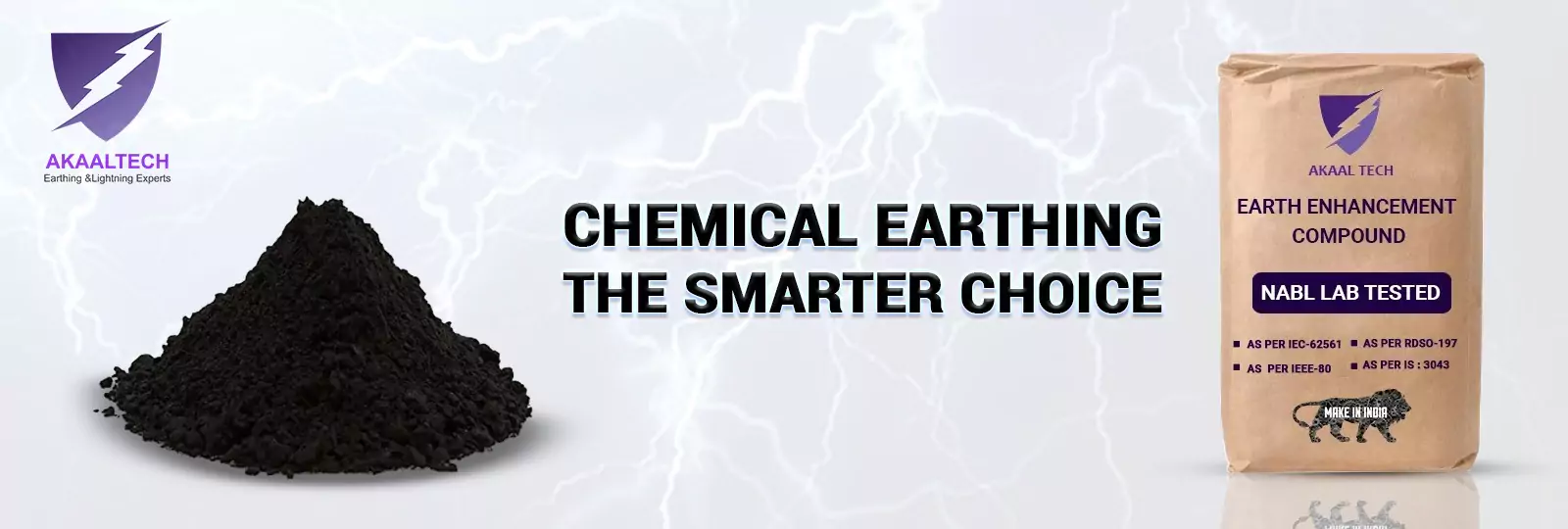
As the world moves on to a greater demand for electricity in today's world, it is more important to provide a reliable and safe grounding system than ever. When it comes to buildings – residential, commercial or industrial plants, good earthing is very necessary to avoid electrical shock hazards, save appliances, and maintain system stability. Two main categories of earthing systems are used regularly: conventional earthing and chemical earthing. Though both are used for the same general purpose, one has turned out to be much more efficient and effective in the long run. chemical earthing.
This blog will discuss why chemical earthing electrodes are a superior option compared to traditional earthing systems and how the switch to such will majorly improve your electrical infrastructure's safety and performance.
What Is Earthing, and Why Does It Matter?
Earthing (or grounding) is a method applied in the case of electrical installation, connecting the non-current-carrying parts of equipment or systems to the ground directly. The goal is simple: divert fault or leakage current safely to ground to save both people and equipment. A properly operating earthing system guarantees an effective and risk-free operation of the electrical installations, as it provides stable voltage levels and stops deadly peaks or shocks.
Understanding the Conventional Earthing System
Traditional earthing is normally based on the use of galvanised iron (GI) or cast iron (CI) pipes buried vertically in the ground together with layers of charcoal and salt. Such materials behave as conductors to scatter the electric current into the surrounding soil.
This method is used extensively, but it has many disadvantages:
- High maintenance: Needs frequent watering to maintain conductivity.
- Seasonal inconsistency: Resistance may vary greatly depending on changes in moisture and temperature.
- Soil dependency: Soil composition and water content play a major role in influencing performance.
- Corrosion: Iron pipes undergo corrosion with time, reducing efficiency and life.
Introduction to Chemical Earthing Electrodes
Chemical earthing, on the other hand, uses advanced earthing electrodes-typically made from copper-bonded or stainless steel rods-surrounded by a special backfill compound. This compound retains moisture, lowers resistance, and ensures stable grounding, regardless of soil conditions.
Unlike traditional systems, chemical earthing does not rely on salt and charcoal. It offers a more reliable, long-lasting solution with minimal maintenance, making it ideal for modern infrastructure and critical applications.
6 Reasons Why Chemical Earthing Is Better?
Let's break down the core benefits that make chemical earthing electrodes a superior choice over conventional systems:
1. Consistent Low Resistance
Chemical earthing systems have a constant low resistance throughout the year. The hygroscopic backfill material ensures the correct moisture retention capability, which provides a stabilized conductive path in any weather and soil environment.
2. Long Life & Corrosion Resistance
There are usually copper or other corrosion-resistant material coatings or bondings, which dramatically increase the service-life (15-20 years easily), if not their complete, permanent replacement with these. This makes them suitable for continuous use under harsh conditions.
3. Maintenance-Free Operation
Conventional earthing systems require regular watering and refilling of salt and charcoal. Chemical earthing eliminates this hassle. Once installed, it remains effective without the need for ongoing maintenance.
4. Space Efficiency
Chemical earthing requires less physical space and digging. This makes it a convenient option for urban installations or sites with limited ground availability.
5. Environmentally Friendly
There are usually copper or other corrosion-resistant material coatings or bondings, which dramatically increase the service-life (15-20 years easily), if not their complete, permanent replacement with these. This makes them suitable for continuous use under harsh conditions.
6. Enhanced Safety & Compliance
Chemical earthing systems are by the modern international and national electrical safety standards. They offer better protection from electric shocks and damage to equipment due to failure to ground them, and from fire hazards due to ground failures.
Read Also:- What Are the Different Types of Chemical Earthing Electrodes and Which One is Best for You?
When and Where Should You Use Chemical Earthing?
Chemical earthing is suitable for a wide variety of applications across residential, commercial, and industrial sectors. It is especially recommended for:
- Data centres and telecom towers
- Hospitals and healthcare units
- Power plants and substations
- Manufacturing units and warehouses
- Residential buildings with limited space or rocky terrain
It's particularly useful in dry or sandy soil where traditional earthing performs poorly.
Cost Comparison: Is It Worth the Investment?
Chemical earthing at first glance might appear costly compared to the traditional systems. Notwithstanding the capital outlay needed in the long-term benefits outweigh. With a much longer lifespan, no maintenance needs, and stable performance, in the long term, it becomes a more cost-effective option. Companies and homeowners who choose to do chemical earthing end up saving money from not having to repair or change things time and again, resources devoured by downtime resulting from faulty grounding.
Besides, there are many manufacturers of chemical earthing electrodes that nowadays produce high-quality, durable products with warranties that will only increase the value of your investment.
Conclusion: The Advantages of Chemical Earthing Systems
Being a company that is concerned with the establishment of safe and sustainable electrical infrastructure, we at Akaaltech believe chemical earthing is a smart move for the future. As compared to the conventional earthing systems, chemical earthing has a longer life, better performance, little or no maintenance, with much safety. If you are updating an existing system or are installing a new system, a change to chemical earthing can ensure considerable increases in reliability and protection.
When long-term efficiency, safety, and environmental sustainability are the point, chemical earthing systems bag all the points.
